Best Fencing Builders: Design-to-Build Preparation Tips
A fence is meant to solve problems, not develop new leisure activities. You know the ones: retrieving runaway animals from the next-door neighbors, dragging a half-finished privacy display back into placement after the first difficult rainfall, and explaining to a pal why your "lumber" project looks suspiciously like a scientific research experiment.
The good news is that a lot of fence failings are foreseeable. They originate from the exact same handful of intending spaces: uncertain extent, hurried layout, shock site conditions, and post-install "changes" that weren't priced due to the fact that no one composed them down. When you prepare like a home builder, you wind up closer to what you in fact desired, not what the materials occurred to allow.
If you're searching for the most effective fence companies, best fence contractors, or best fence installers (and indeed, "ideal" must suggest various points at different phases), one of the most trustworthy path is design-to-build planning. Consider it as converting an idea into a timetable, a specification, and a reality-check on your site.
Below are the planning ideas I make use of when customers are looking for the best fencing builders or best fencing contractors and desire results that look intentional for years, not months.
Start with what the fence should do, not what it should look like
People frequently lead with the style image. That's typical. But design is the final attire, not the underlying bone framework. Prior to you love an appearance, define the task your fence needs to do.
Privacy-only fences behave in different ways than security-only fences. An attractive picket fencing is mostly regarding sightlines, while a stockade fencing is mostly regarding wind tons and panel rigidity. If you tell a builder "privacy," you'll get something taller. If you inform them "personal privacy from the second-story window across the residential property line, and also solid enough to manage gusts," you'll obtain a layout that really earns its keep.
Here's a straightforward instance from a job website I keep in mind clearly. The house owner chose a gorgeous cedar board-on-board style, tall sufficient to obstruct views. Then the very first windy stretch showed up, and one area loosened up along the leading bolts. The fencing still looked great, but it wasn't doing the full job because the blog post spacing and bracing plan had not represented the local gust pattern. No one was "incorrect," they simply hadn't specified what "strong" suggested in builder terms.
So ask yourself:
- How much privacy do you require at eye level?
- Do you want exposure obstructed, sound reduced, or both?
- Are kids, animals, or livestock involved?
- Do you need entrances to lock dependably and stay aligned over time?
The solutions established whatever: elevation, framework, fastener selection, panel style, and hardware.
Get serious about dimensions early, while every person is still polite
Fence projects are notorious for margin creep. A little mismeasurement turns into a great deal of additional product, and additional material turns into routine stress. The most effective fence installers I have actually dealt with treat dimension as a craft, not a chore.
If you currently have an existing fence, determine it even if you prepare to change it. Why? Due to the fact that fencings are often the only "reality" that locals can indicate. It shows you where fact differs from assumptions. Additionally, older fencings sometimes reveal hidden challenges, unequal grade, or prior repairs that might affect brand-new article locations.
When you plan design, don't simply determine length along one line. Work out:
- line angles where the fence transforms,
- gate openings (and which side swing or instructions you desire),
- and just how corners will certainly be framed to stay clear of odd sliver panels.
A common preparation mistake is thinking you can "make it work" with a little panel here or there. You can, but you'll spend for it in labor and you may despise the appearance. I have actually seen fencings where the final runs finished with skinny boards that appeared like the installer ran out of perseverance. That might have been avoided with a two-foot change very early on.
If you're employing best fencing installers, ask just how they manage format. A good professional will describe laying, string line or laser design, and how they validate dimensions before ordering.
Decide the fencing line and the property reality
This part is much less attractive than wood grain, yet it's where projects succeed or fail.
Property lines and fence lines are not always the very same. Occasionally they are balanced out as a result of previous surveys, easements, or neighborhood method. Occasionally the "old fencing" gets on the next-door neighbor's side. Occasionally the yard looks level up until you start digging and discover it's a sloped roller coaster.
Before a builder orders blog posts and products, validate:
- where the fence line ought to be about residential property borders,
- any troubles from easements or right-of-way,
- and whether there are local regulations about elevation or fencing type.
I'm not mosting likely to claim everybody wants to read local code like it's a bedtime tale. Still, you can be sensible right here: ask your home builder what they typically require from you (commonly a study or a limit confirmation), and ask what they do if they discover line problems during layout.
Good best fencing contractors will certainly inform you up front that they'll stop if there's uncertainty, due to the fact that it's less expensive to clear up than to rebuild.
Choose materials with your environment, not your Pinterest account
Materials are where fencing people tend to obtain mentally affixed. You may like cedar because it's warm and classic. An additional house owner wants plastic because it's low upkeep. Both can be good. The key is matching the product to your environment.
Consider these elements:
- freeze-thaw cycles (they affect dirt movement and post stability),
- moisture direct exposure and lawn sprinkler patterns,
- sun strength (some surfaces fade much faster),
- and wind direct exposure (panel toughness and post supporting become non-negotiable).
For example, composite and vinyl can be great in many environments, however if you're in a high-wind location, the style still matters. Plastic privacy panels might look inflexible, but they need appropriate assistances and safe mounting to execute gradually. Wood can be more forgiving in specific ways due to the fact that it's personalized, but it needs the right bolts and a reasonable maintenance plan.
Also, inquire about grading and water drainage. If water collects along the fence line, you desire products and outlining that can manage it. The "best fence builders" I have actually seen don't just price quote a product, they review water habits like it becomes part of the structural system.
Height, gates, and sightlines: where planning mosts likely to pass away (unless you intend it)
Height is not just a number. A six-foot personal privacy fence isn't constantly six feet of privacy. Points like irregular ground and how panels are installed (top rail degree versus step) affect what you really see.
Gate preparation is the tricky one. Gates are moving components. They need:
- correct framework,
- appropriate joint spacing and equipment,
- and an opening width that matches the path you'll really use.
If your entrance is for a wheelbarrow, don't develop it as "a decent walking width." Measure the devices and leave clearance. If it's for children or pet dogs, see to it latch height and operation are intuitive. I have actually enjoyed gates get set up with latches that look fine up until a Visit this website person tries to open them with one hand while holding a leash.
When you speak with best fence contractors or best fence installers, ask just how they deal with:
- gate reinforcement,
- self-closing habits (if you want it),
- and how they'll avoid sag in the first year.
Sag typically originates from little decisions made early, like underbuilding gate frames or establishing blog posts on suspicious soil.
Build a specification, not simply a vibe
One reason people feel melted is that "design-to-build planning" gets changed with "we'll figure it out." Fence tasks can not tolerate that strategy for long. Timber is seasonal, metal swells and agreements a little, and the very best intents do not replace a clear scope.
When you request a quote, push for a composed range and a spec that covers details like:
- post spacing,
- rail or framework configuration (for privacy styles),
- panel type and density,
- finish or finishing assumptions,
- and that manages elimination of old fencing (if any kind of).
If you're talking to best fencing builders, listen for whether they chat in specifications. Not marketing phrases, real planning details. A contractor who can clarify their securing strategy, corner therapy, and exactly how they take care of changes in between sections normally has actually done this enough times to anticipate headaches.
If you're contrasting numerous specialists, request for the very same baseline info from each quote. If one quote includes entrance equipment high quality and an additional does not, the "less expensive" one can become the expensive one fast.
Site problems: the dull part that conserves your budget
You can not constantly anticipate what remains in the ground, however you can prepare for the chance of surprises.
Common website problems consist of:
- rocky dirt that complicates boring,
- unknown drainage paths,
- uneven quality creating panel placement issues,
- and hidden utilities or obstacles.
A liable service provider will talk about how they locate energies, whether they suggest a particular procedure for validating below ground lines, and exactly how they handle "located conditions." If you want to avoid adjustment orders, don't wait until the article holes are open to find you likewise need a prepare for rock elimination or retaining adjustments.
A tale worth sharing: on one building, the soil looked very easy on leading, but the initial couple of blog post openings hit a thick layer. The specialist had a plan to switch to an alternate technique, however it still affected labor time. Due to the fact that the range already attended to "problems impacting excavation depth," the adjustment order was simple as opposed to combative. That's the difference in between a home builder who prepares for genuine job and a specialist who just prepares for the best-case version of the job.
Weather and timetable: prepare for timing like you would certainly prepare for guests
Fence job is timing-sensitive. Product delivery, treating times for certain surfaces, and post installation home windows all matter.
If you're working with best fence installers in an area with heavy rain or wintertime freezing, ask:
- what seasons they favor,
- how they take care of hold-ups,
- and whether they can present the project so you get partial sections done even if climate interrupts.
Scheduling also affects the "appearance." Straight lines depend on format precision and regular installation. If your fence is installed in a disorderly series with re-staking and re-measuring each day, you're more probable to see small variations.
If you can, coordinate gain access to. Clear a path for delivery trucks and allow work areas around the border. The best fencing companies can relocate quicker when the site cooperates.
Ask concerning service warranty and craftsmanship standards, however concentrate on exactly how they respond
Warranty is commonly advertised as a heading, yet performance has to do with the guarantee process. I prefer to hear how a contractor manages problems than what the service warranty sales brochure says.
When you ask concerns, focus on situations that actually happen:
- posts leaning after a period,
- gate sag after duplicated usage,
- staining or coating problems after climate exposure,
- and equipment failure.
The best fence contractors don't obtain defensive. They discuss what's covered, what isn't (frequently abuse or disregard), and exactly how they confirm the cause.
Also inquire about what "completion" suggests. Is cleanup consisted of? Is particles hauled away? Are minor adjustments consisted of after installment? These information affect your first week of ownership, not just year one.
The quote review: exactly how to contrast specialists without playing thinking games
If you're comparing quotes from best fencing contractors, best fencing installers, or any type of "best fence companies" you're considering, the method is to compare apples to apples. Many quotes look similar until you review them line by line.
Here's a brief list you can make use of to decrease confusion. It's not implied to question any person, it's suggested to see to it everybody is bidding the very same job.
- Confirm fencing type, elevation, and style suit throughout quotes
- Verify post spacing and gate equipment information are explicitly included
- Check whether removal of old fencing and disposal are included (or otherwise)
- Ask how the contractor handles uneven grade and message depth modifications
- Ensure the quote details warranty terms for posts, panels, and gates
This is where you'll capture the classic bait-and-switch. One service provider gives you "privacy fence" but doesn't specify the inner framing or the fastening system. An additional claims "stain consisted of" however does not clear up whether it's factory-finished or field-applied. Both can result in undesirable surprises.
A functional preparation example: turning "we want privacy" into a buildable plan
Let's convert an usual demand right into a clearer strategy. Claim you desire personal privacy from a next-door neighbor's second-story window and you're taking into consideration a timber board-on-board look.
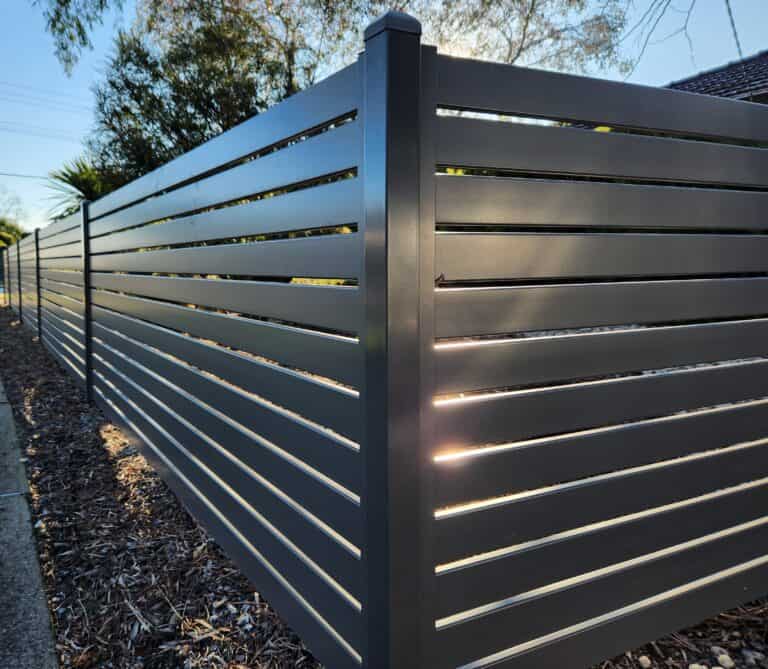
A design-to-build plan might specify:
- height that meets personal privacy requirements at your eye level,
- a board-on-board style with overlapping boards that restrict sightlines,
- post spacing that keeps panels rigid under wind,
- and corner treatment that avoids voids at the turns.
You additionally determine how you want the fencing to comply with grade. Do you prefer a stepped style, or a top rail level look? Tipped styles usually fit irregular ground better visually, but regional regulations and products could affect the choice.
Then you confirm just how gateways match the run. If the gate is lined up with the fence line at an angle, you'll require right diagonal supporting or reinforcement to stay clear of sag. That's an information you can't properly leave to day-of "we'll figure it out."
When customers ask me why preparation feels so thorough, I inform them: since fences have to remain in area with wind, climate, and time, not just via the aesthetic moment of shipment day.
Common compromises you ought to determine before the first board is cut
This is where judgment can be found in. There's hardly ever a perfect option, only the very best choice for your constraints.
For instance, thicker materials can cost even more but may decrease warping danger. Extra constant message spacing raises material and labor however enhances rigidity. A specific style may look sharp but need more specific alignment and therefore much more cautious setup time.
A a little much more expensive fencing can be less expensive lasting if it requires less changes and less upkeep. Conversely, a lower in advance expense can become costly if it welcomes regular fixings since the layout really did not match the local conditions.
The most intelligent relocation is to choose what you are maximizing for:
- lowest upfront expense,
- fastest installment,
- long-term low upkeep,
- or optimum privacy and rigidity.
That choice assists your building contractor propose the appropriate system.
Glossary of decisions that show up on site (and just how to plan for them)
You'll run into tiny terminology and great deals of judgment phone calls. Being ready protects against delays.
- "Post depth" is frequently the difference in between steady and wobbly over seasons, however the appropriate depth depends on dirt and frost conditions.
- "Spacing" influences aesthetic rhythm and toughness, and it can transform the number of boards you need.
- "Set up and supporting" matters for edges and futures, specifically if the fencing is revealed to wind.
- "Leading cap" or "post caps" impact water shedding and surface long life on several styles.
Ask your professional to explain just how their system manages those elements. The more you understand, the simpler it is to see if their method is thoughtful or generic.
What to do when your strategy modifications midstream (since it most likely will)
Sometimes you'll transform your mind. It's normal. Perhaps you add a gate. Possibly you choose you desire a various height after determining darkness at different times of day. Maybe you realize the fencing line requires a tiny adjustment for landscaping.
But adjustments midstream produce expense shifts. The difference between workable and painful is whether you intended a clear procedure for modifications.
Discuss change-order presumptions up front:
- what changes require re-measuring,
- whether the specialist can reuse products,
- and just how extra labor and time are calculated.
The best fencing builders have a tendency to have a calm system for these discussions. They don't treat adjustment as an individual disrespect. They treat it as a regular part of building a real thing on an actual site.
How to maintain the project feeling "human" while the extent remains tight
Fence projects are part customer experience, part design. You desire clear assumptions without transforming the job into a lawful document.
A basic way to stabilize both:
- keep a folder (electronic or physical) with drawings, item specs, and approval notes,
- and call for confirmation for modifications that impact cost or timing.
Also, don't ignore communication. Ask when design will certainly be marked. Ask when the first line is staked. Ask what they'll require from you for entrance decisions. Those checkpoints assist you catch errors early, when repairs are cheaper and less visible.
And of course, it's all right to be a little annoying regarding details. A fencing is a lasting investment. If a professional can handle your inquiries with persistence, that's a good sign.
Final idea: "best" is not one company's slogan, it's a process
When house owners search for the most effective fencing companies, the best fencing contractors, or the very best fencing installers, they often desire a shortcut. There isn't one. The faster way is planning well.
Design-to-build planning transforms a good idea into a clear set of decisions: the fencing line is recognized, dimensions are validated, products match problems, gates are engineered, and quotes are comparable. You'll still deal with the occasional shock since sites are unpredictable, but you'll be ready for it, and your home builder will certainly too.
If you select best fence companies based only on exactly how the fencing searches in a brochure, you're gambling with your lawn. If you choose best fence contractors and best fence installers based upon how they prepare, specify, and respond, you're getting something better than aesthetics.
You're buying self-confidence, the kind that appears when the very first windy weekend break hits and your fence stands there like it implied to all along.